domingo, 10 de septiembre de 2023

PDP (Pre-During-Post)

Hello everyone, welcome to a new entry! 馃挓

During this week, we were introduced to the PDP method, specifically designed for developing receptive skills.


It is essential because it allows teachers to effectively design and create effective listening and reading comprehension lessons that improve students' comprehension and achieve the goal of allowing them to understand the text. In addition, it prepares students for various activities that improve their comprehension skills, encourages active participation in reading or comprehension lessons, and promotes the improvement of receptive skills.✍馃

PRE - It represents the pre-lesson phase that follows the learners' engagement with the text through reading or listening. During this phase, activities include actions such as activating prior knowledge, evaluation of learners' prior knowledge, and introduction of essential vocabulary necessary for understanding the text.

DURING - This phase of the lesson takes place when students are actively engaged with the text through reading or listening. During this phase, learners are introduced to a variety of activities designed to provide them with repetitive interactions with the text. These activities are presented to the learners before they read or listen to the text and should involve a variety of teaching techniques.

POST - This phase takes place once students have completed the reading or listening task and have demonstrated comprehension. The POST phase, it is not essential in a receptive skills class, serves as an additional component. The student's primary learning objective is achieved at the end of the DURING phase. Activities in the POST phase focus on developing and incorporating supplementary skills by using and extending the content, or topic of the text. These activities also help learners strengthen their new knowledge.

Teacher Orlando provided us with a comprehensive lesson with all these steps, primarily focusing on the topic of scents. He sat down to write the lesson plan and asked us for ideas, making it an interactive experience. However, in my opinion, this class was also one of the most theoretical sessions we've had on this register.

So, that would be all for now, see you next time, bye-bye.馃懡馃挋

domingo, 3 de septiembre de 2023

Grammar and vocabulary classes

Welcome to a new check-in and a new post on my blog!馃懟❤

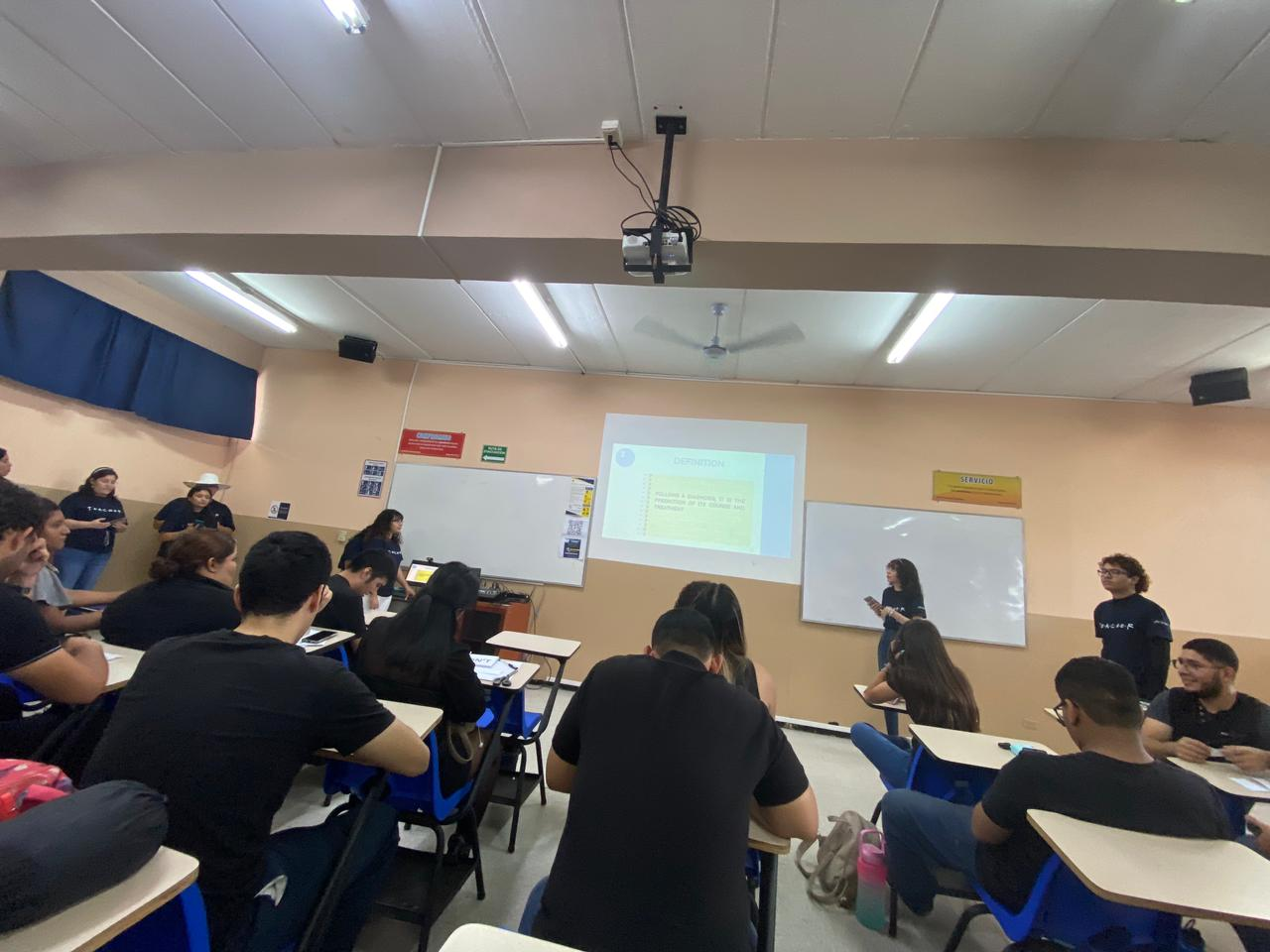
For this week I bring a summary of how we made groups and gave either vocabulary or grammar classes, which for some of us was something new to take on the role of teacher. 

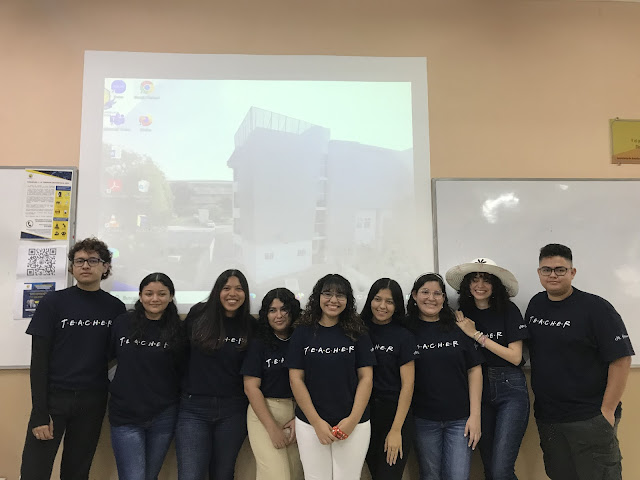
First I would like to mention how random it was that we all arrived in black, each group had to choose a color and coincidentally, we all chose black.馃槀


Group 1: Vocabulary - Hospital馃彞

We started our classes, and the first group presented a particularly fascinating topic! We were instructed in the vocabulary related to hospitals, which was very informative. Surprisingly, there were certain words that we were unfamiliar with despite having an advanced level of English, or so we thought. 

First, they gave us some definitions and then went on to give us pages with exercises, they gave us an alphabet soup and another one to relate the term with its definitions. Then, they went on to do something more practical which was a game of Kahoot which I won second place, a win is a win.

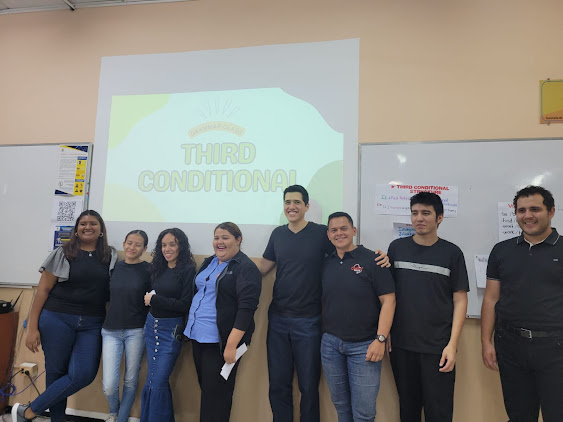
Group 2: Grammar - Third conditional馃搼

This group gave a lesson on the third conditional, which uses the "if" clause to talk about events that never happened or to describe hypothetical situations in the past.

We were initially instructed on the structure and then guided to form sentences on the board, also providing a set of sentences for us to identify the constructions of the Third Conditional.

I liked that it was a pretty organized group and they made everyone participate, they were committed to everyone learning the structure. 

Group 3: Vocabulary - Cooking馃嵆


It's my group's turn. We chose culinary vocabulary because we think that these are words that, despite having a good level of English, we still don't have much knowledge outside of the basics. I liked this topic because we learned techniques, ingredients, and procedures that I had no idea how to say. 

We started by asking what their favorite dish was and if they had an idea of how to prepare it. And basically, that was the point of the whole class. We taught new words, most of which are derivations of French, as well as procedures, and we pushed them to bring out their inner chef.馃崥


Group 4: Grammar - Second conditional.馃寛


They talked about the second conditional. During the lesson, we understood that the Second Conditional is used to talk about future events that are improbable or situations that are not possible.馃唶

For the activity we were put into groups and given an envelope with cut out words, which we had to order and put together sentences. 


Then, they showed us that they had a roulette wheel with the name of each one of us. I was telling a friend that it would be bad luck if our name came up out of all the names, and that's when my name came up on the wheel and I had to participate.馃ぁ And finally, they did a chain sentence activity, so to speak, they did was the students had to use what the last person had said, using the second conditional, and create a sentence.

It was a challenging but interesting activity. That was all for this entry, I hope it has been fun to read. See you next time, bye-bye馃挌馃懡


lunes, 28 de agosto de 2023

PPP: Presentation - Practice - Production

Hi everyone, welcome back to my blog! ✌馃憖

And just like that, this is the last entry of the register ☹. 

But hey, life goes on, so does my blog. This week's topic is PPP which stands for Present - Practice - Production. 


Stages of a class:

Presentation: During the initial phase, referred to as the presentation, the teacher dedicates a significant amount of time to providing explanations. Within this phase, students grasp various concepts. Primarily aimed at instructors, this stage demands resourcefulness as they strive to effectively ensure student comprehension.

Practice: Interaction flows between students and teachers in a dual manner, and while students engage in active practice, teachers offer essential guidance and supervision.

Two practice modes exist: controlled practice and free practice. The former minimizes the potential for errors, requiring teachers to integrate a couple of controlled activities before transitioning to the latter mode—free practice. This second phase allows students to solidify what was presented by the teacher, granting them greater linguistic freedom to experiment and apply concepts independently.

Production: This phase belongs to the students; teachers must allocate adequate time. In fact, this phase should occupy most of the teaching plan. Up to this point, students should be able to show genuine results by performing tasks that reflect real-life situations.


Well, that's it for this entry. Stay tuned for the next one because it will be about us teaching our first classes, or something like that馃槄 See you later bye-bye!馃懡馃挏

viernes, 18 de agosto de 2023

Flexibility in Lesson Planning

Hello everyone, it's a pleasure to have you back! ❤✌


For this week's class, Teacher Orlando let us know if we could come a little early to class, as we would have senior students visiting us because of their thesis process, who wanted help to do a sight interpretation and fulfilling a survey, which I couldn't help them by reading the text because I was sick and my throat was sore.馃拃 We started by doing a short survey, and it helped me to refresh my memory on what sight interpreting is, I haven't practiced it since last year I guess, thanks to that it made me want to try it again.

Then came the second special guest who is a 20 years experienced interpreter and translator, she is a student of our career as well, Regina.馃憦 She mainly came to explain to us what this field of work is like, how we should be paid, what things to consider before accepting a job, knowing how to value what we do, and motivating us to move forward. She gave us some tips through a professional and useful presentation, the truth is that it was a great opportunity to have someone come and answer exactly the most common doubts we have as future translators and interpreters.馃懚

Both things were very interesting, but it took longer than expected and we had little time left to have our Didactics class that was already planned. Even so, teacher Orlando was able to explain some of the things he had prepared for that day. We engaged in a discussion about the flexibility and magical moments in our classes. As an example, Regina's presentation stood out for both situations. It was a magical moment because we learned a lot thanks to her, she spoke to us about a necessary topic that we have to take into account, and at the same time, thanks to her teacher Orlando was able to show us a clear example of flexibility because he had to adapt after not having the time he had planned to give his class.馃拝

Another notable aspect focused on objectives. According to Teacher Orlando's materials, key considerations include "time, particular subject, anticipated outcome, and how to identify it” A helpful phrase introduced was "SWABT (Students will be able to)..." followed by the topic you are going to teach. In addition, we learned that simplicity in the classroom can produce substantial effectiveness. This idea reinforced that our teaching methodologies must fit perfectly with our pre-established objectives.


I know this entry was a bit short but there was still a lot of new and useful information. So, that would be all for now, see you next time, bye-bye.馃懡馃挋

viernes, 28 de julio de 2023

Activities in the classroom

 Hello everyone, welcome to a new entry! 馃挓

This week we returned to the classroom where we reviewed lesson planning and the topics covered in the previous week. Teacher Orlando provided us with examples of activities to group students in the class and ways to measure time, emphasizing the importance of creativity in the process. 

This class focused more on how we could make the class more dynamic so that students feel motivated and attentive at all times.馃挭 That is, physical activities can be done to keep them moving and active when they are about to lose their concentration, as teachers, they feel the responsibility to do something entertaining, that is why in the classroom they usually have materials and objects of all kinds. 馃挜

The first thing that was mentioned is that teachers should understand the importance of addressing students by name, as it promotes motivation and a sense of being valued. Remembering their names can make students feel special and appreciated.馃挏 Therefore, it would be beneficial to provide name tags for each student at the beginning of the term, as it helps to foster a friendly and welcoming environment where everyone can easily get to know each other.


Then we were talking about some activities to measure time and grouping people, Personally, to measure time I like the simple, but with something nice or allusive, so I thought that I could use an hourglass⌛ a little big to be pleasing to the eye, but at the same time to cause pressure because it is going to end.馃拃 And for grouping people, also something simple like the length of their hair, those with short hair in one group and long hair in another, or the color of the shirts they wear, even by their birthdays could be a good idea.馃懇 You have to consider that it must be something that as teachers we must make sure that it is true to be able to do it. 

We also thought of some activities to make sounds and ensure participation. I was thinking of something simple like snapping fingers, although I know not everyone can do it (I am an expert at that), or stamping feet, which I also think is fun, although tiring (I get tired pretty fast)馃懙. And to ensure participation, I was thinking of a bingo game format, make little pieces of paper where each one has the name of each student, put it on a wheel or something that spins or makes it mix them up, and then take them out.馃構

After taking the time to write down our ideas, we played a game almost like a hot potato, passing around an object, in this case, a ball, a snake, a die, and a two-faced octopus, and whoever had the best idea would share it. 


Finally, we talked about warm-up activities, which are done before talking about a new topic. Usually, you ask questions like "What do you remember from the last class?", or to measure the knowledge you have, or you can also just do something fun to let the students start the class in the right mood馃榿. Since it is an introductory activity, while it is fun and dynamic, it should also be short, and try to keep it to no more than 5 minutes, or else the purpose is lost and the agenda can fall behind. 

To be honest, this class was a lot of fun, it made me realize how creative some teachers are and how they make an effort not to bore us and teach us as much as possible.馃挀

And that's it, I hope you liked this week's entry. And I hope you are ready to have a great vacation (I already am). Happy vacation, and see you soon. bye-bye.馃挌


martes, 25 de julio de 2023

Lesson planning, CCQs & ICQs

 Hi everyone, welcome back! Let's get ready for a new entry馃憖❤

Well, first I would like to say that last week was a little different because we didn't go to the University for its anniversary, and for some classes, we worked virtually, which made me realize that I prefer to go to receive my classes and not at home. 馃槡

For Thursday's class as we could not attend, teacher Orlando left us some things to do, first, we had to watch some videos about Lesson Planning, which was very interesting for me because it always surprises me to realize how many things you have to keep in mind when teaching and everything that can be done in the classroom. The video provided valuable information and helped me understand the importance of the whole process of class preparation. It made me realize that without proper preparation, many problems can arise that prevent us from achieving our goals. 馃挭 Also, we have to consider certain key elements, such as clearly defining the objectives to be accomplished, determining the most effective way to conduct the class, and identifying the appropriate materials necessary for the lesson. These points are related, but they play a crucial role in delivering a successful lesson. This was basically my opinion that I had to record on Vocaroo馃構

Then, I read the PPT that the teacher prepared for us where there were some questions, that we had to post on Padlet, about how we expected to be in the future, if we have achieved what we wanted, or if some things changed. This activity made me think more about myself and motivated me because I said "Wow, if I have achieved this I never imagined I would" It's nice to see and know that we can do anything in the end.馃挓

Lastly, I learned about a topic that, to be honest, took me a while to understand because I got confused, but I think I got it. I learned about the CCQs, which stand for Concept Checking Questions, and what I understood from this was that include precise questions related to a topic to evaluate students' understanding of the material being taught. These questions serve to measure their understanding of concepts, grammatical structures, and vocabulary. Having students participate in class discussions and write on the board allows you to check whether they have really assimilated the content of the lesson. 

On the other hand, we have the ICQs which stands for Instruction Checking Questions. The main objective is to determine whether students understand their assignments and whether they are working together in groups or individually. Instead of offering direct instructions that might add to their confusion, you can simply ask straightforward questions like "What are you planning to do?" This method fosters their active involvement and ensures they fully comprehend the task. It's not essential to provide immediate solutions; instead, let them attempt, explore, and even make mistakes, as it is a valuable part of the learning process.


And that would be all, as you could see despite not being able to be there, there is still a lot to learn. I hope you liked it and see you next time, bye-bye. 馃挌馃挋


domingo, 16 de julio de 2023

Welcome back!


Hello everyone, welcome again to my blog!✌馃懡

Once again it will be a pleasure to share with you every class and experience developed, in this case, it will be about English Didactics II! 馃挮

It is amazing how fast time goes by and we are almost at the end of this journey, regarding this subject, I feel a little nervous, but at the same time excited and ready for what is to come. 馃挭

Well, first we were introduced to and explained how we would be working the 3 registers, although there will be theory in the first, the second and third will be more about putting into practice our knowledge and placing ourselves in the shoes of a teacher, that will be a great experience.馃槵

Then, we had a diagnostic evaluation, which I did pretty bad because I didn't remember anything about the first two parts of the test. However, the only thing I got right was the teaching methods which are still fresh in my memory because I saw them last semester. Afterward, the teacher gave us the test back to answer together and we watched some videos that helped us answer the theories part. 

I got 6/15, I said I didn't do that well. 馃槄

As I said before, I'm a little nervous about taking on the role of a teacher, but I'm still looking forward to it, I'm sure I'll do my best.馃懟

And that would be all for this introduction entry... see really you soon, bye-bye.馃挋